

 Log in
The Frostborne
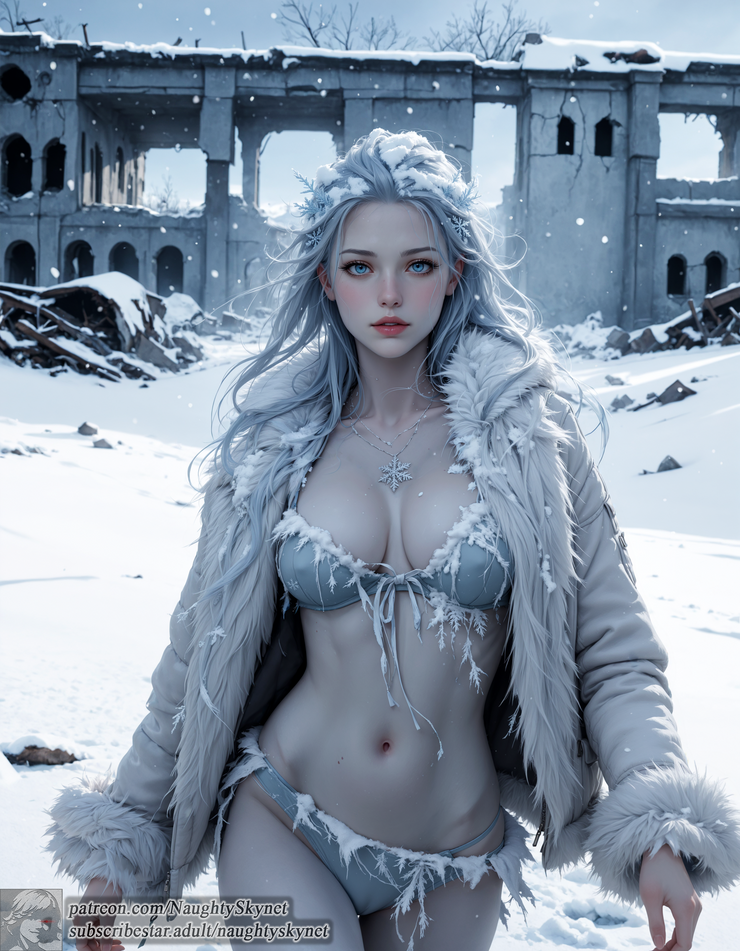
When the sky broke and the world froze, humanity learned quickly that fire alone was not enough.
She was among the last survivors of the northern cities, where the cold was no longer natural, it was engineered, a lingering atmospheric collapse that turned breath into knives and skin into glass. Early on, she scavenged like the rest: furs, shelter, movement. But winter outpaced adaptation. People vanished overnight, perfectly preserved beneath the snow.
Her evolution began as necessity, not choice.
Exposure rewrote her. Repeated near-freezing forced her body into a dormant survival state, slowing circulation, conserving heat deep around the heart, rerouting energy the way hibernating beasts once did. Over time, her metabolism adapted, producing a constant internal warmth, subtle but unending. Ice no longer burned her skin; it rested on it. Frost formed where she stood, not because she was cold, but because the world around her was.
The clothing she wears now is symbolic more than practical. She no longer layers for warmth, only for protection and memory. Snow gathers in her hair. Ice crystallizes along her skin. Her breath rarely fogs.
Among the ruins, survivors whisper her name when storms roll in.
They say the cold recognizes her.
They say she belongs to it now.
They say she belongs to it now.
And when the wasteland howls, she walks forward, unafraid.